What is CRT Day Trading
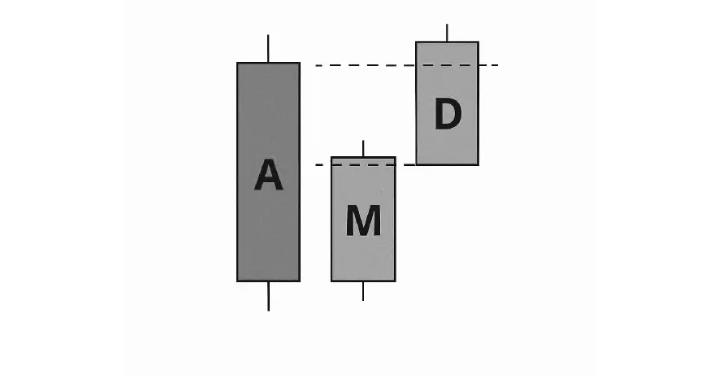
When it comes to the question - What is CRT Day Trading? It is simply a Trading Concept focused on the CRT Trading Strategy In ICT Trading CRT stands for Candle Range Theory While practicing ICT Trading, you will learn...
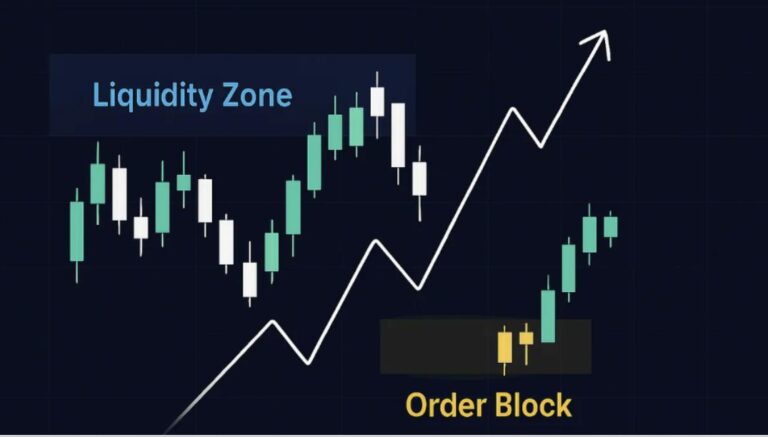
ICT Trading defines Order blocks as a specific market condition where large institutional orders are placed. But what happens to an order block when it “fails”? Do these Order blocks lose their value?
Not at all. In fact, they offer us valuable zones that, when understood correctly, can serve as powerful standalone market analysis tools — these are known as ICT breaker blocks.
A breaker block, as defined by the Inner Circle Trader (ICT), is a failed Order block that results in a major shift in market liquidity, which can flip the market structure from bullish to bearish or vice versa.
When an order block fails, it alters the current market outlook and acts as a key indicator for future market movement.
The core idea behind these Breaker blocks is the search for liquidity by market algorithms. Traders typically spot these order blocks to forecast market movements.
A bullish breaker block is expected to drive prices up, while a bearish breaker block should have the opposite effect. As a result, traders position their stop losses below the level for bullish scenarios and above it for bearish ones.
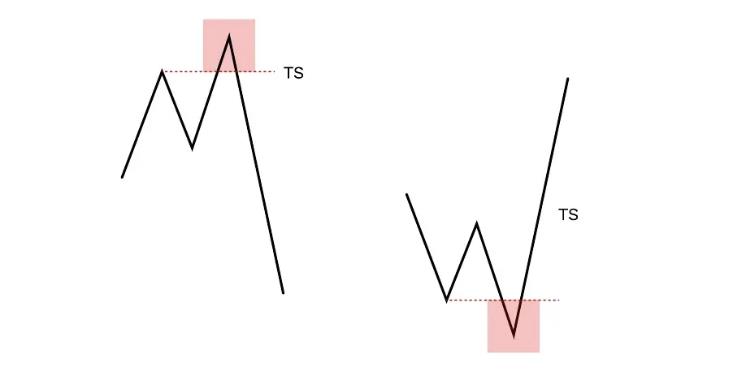
However, market makers and smart money traders often take advantage of these situations, triggering stop losses and pushing the market in the opposite direction by creating a Liquidity grab. This is where the concept of Breaker block Trading becomes highly relevant.
When identified as a failed order block, a breaker block (BB) takes on a new role: it becomes a level of support or resistance. This shift is critical in understanding how to use breaker blocks in forex trading.
A failed bullish order block transforms into a bearish breaker block, and a failed bearish order block turns into a bullish breaker block. This role of reversal is central to leveraging breaker blocks for predictions and strategy formulation.
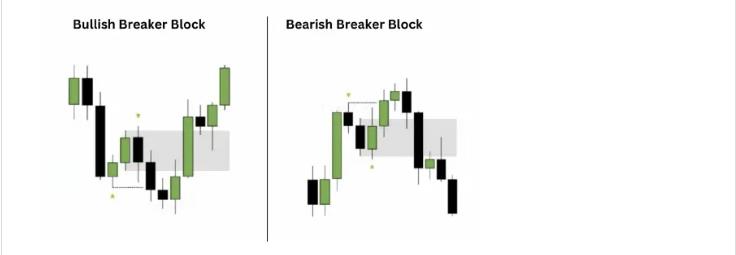
Unlike order blocks, where traders focus on the price level where institutional traders make large buys or sells, a breaker block represents the end of smart money pressure.
When an ICT bearish order block fails, it can transform into a bullish ICT breaker block.
In future price action, when the price revisits this area, it tends to act as a support zone.
This is because the failed bearish order block — now a bullish breaker block — provides a level where buyers are expected to step in, potentially pushing the price higher as they defend the area from further downside movement.
A bearish breaker block occurs when a previous bullish order block fails, and price breaks through it, signaling a shift in market sentiment from bullish to bearish. Once the bullish order block is breached, it transforms into a bearish breaker block, which now acts as a resistance zone in future price action.

When price revisits this area, the former bullish breaker block often functions as a resistance level, where sellers may enter the market, pushing the price lower. Traders look for bearish reversal signals in this zone, as it typically marks an area where selling pressure could dominate, leading to further downward movement.
Using breaker blocks effectively in trading can be a bit challenging. To use them to your advantage, here’s a step-by-step guide:
The first step is to recognize the market structure shift. By analyzing price movements, you can determine if the market has broken its previous order flow and reversed direction. Identifying this Market Structure Shift is key to spotting potential breaker blocks.
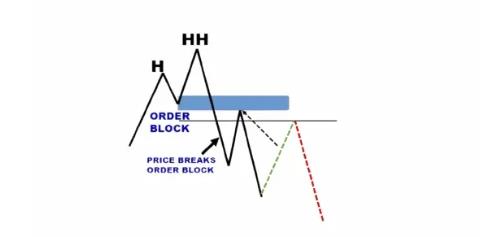
A breaker block is a failed order block that signals a change in momentum. It is typically identified after a significant price movement where the market fails to sustain its direction and reverses. Once the trend changes, the failed order block takes an opposite role, just like support levels become resistance after a price breach.
For example, failed bullish order blocks become bearish breaker blocks, and failed bearish order blocks become bullish breakers.
Once a breaker block is identified, traders expect the price to return to this level. This retest often signifies a consolidation phase before the market decides its next move.
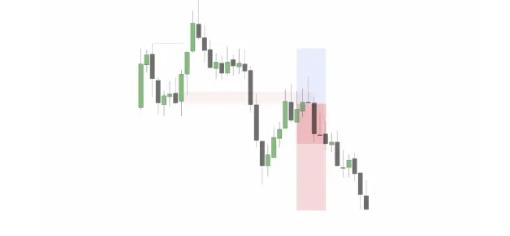
Before entering a trade, wait for confirmation at the breaker block level. This confirmation may come in various forms, such as the formation of Fair value gaps as shown in the image below.
From a trade execution point of view, combining ICT (Inner Circle Trader) concepts like Market Structure Shift, Fair Value Gaps (FVG), and trading during the ICT Killzones on shorter timeframes like the 15-minute (15M) and 5 minute (5M) charts can be highly effective for precise entries.
The win rate for this strategy is approximately 77%, as confirmed through back testing.
However, its effectiveness largely depends on the trader’s understanding of market volatility and overall market conditions.
Free. No signals, no recommendations.
 by
by